The Age of Sitting and the Decline of Our Health
How many hours do you think you spend sitting during a typical 24-hour day?
NEWSLETTERS
Joanna Telacka
6/9/2026
Every now and then, I ask my clients a simple question:
"How many hours do you think you spend sitting during a typical 24-hour day?"
The answer is almost always the same.
"I don't know."
So I ask them to think it through—not including sleep, just the hours they are awake.
Breakfast
Driving
Working
Lunch
More work
Dinner
Watching television
Scrolling through social media
Reading
Shopping online
...add yours here. 🙂
By the time we add it all up, the number is often surprisingly high.
What fascinates me isn't the number itself. It's what usually comes next. Because these are often the same clients who come to the studio telling me:
"My hips feel so tight."
"My back hurts."
"I feel stiff all the time."
"Getting up from the floor is becoming difficult."
I'm not asking them to count their sitting hours to make them feel guilty. I'm simply trying to encourage a little critical thinking by inviting them to ask themselves one question:
"Could there be a connection?"
In my experience, there is usually a reason why our bodies feel the way they do.
We are often quick to blame our discomfort on something we did.
"I must have slept wrong."
"I must have lifted something."
"I must have overdone my workout."
Sometimes those things are true. But sometimes an even better question is:
"What have I stopped doing?"
Sometimes the answer isn't found in what happened yesterday. It's found in what has been happening every day for months or even years.
The human body adapts remarkably well. If we challenge it regularly, it becomes stronger, more coordinated, and more resilient. If we spend long periods sitting, it adapts to that, too.
The hips gradually lose mobility. The spine moves less. The shoulders gradually creep toward the ears. 🙂
Breathing becomes shallower and less efficient.
Medical professionals have even compared the effects of prolonged sitting to smoking because of its significant long-term impact on overall health. None of this happens overnight. It happens little by little until one day we accept it as "just getting older."
Nearly 80 years ago, Joseph Pilates was already observing this.
In Return to Life Through Contrology, he wrote:
"Standing also is very important and should be practiced at all times until mastered. First, assume the correct posture, then when tired, shift the weight on the body from one side to the other while resting on the 'idle' side. Do not push your hips out or lock your knees."
"Never slouch, as doing so compresses the lungs, overcrowds other vital organs, rounds the back, and throws you off the balance created by poising the weight of your body on the balls of your feet."
He understood something that is just as relevant today as it was then:
The body responds to how we use it—or how little we use it.
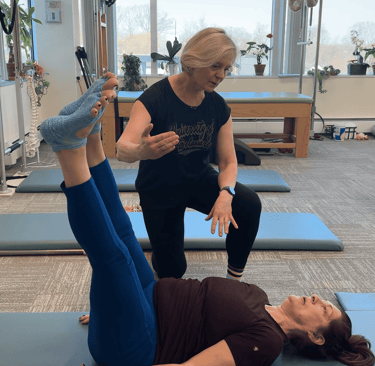
Interesting, isn't it, how relevant his observations still are today?
Even though we know much more about anatomy and biomechanics than people did 80 years ago, the human body itself has not changed. We still have the same spine, joints, muscles, lungs, and nervous system. We still need mobility, strength, coordinated breathing, balance, stamina, and efficient movement.
That is why the Classical Pilates method remains timeless.
After nearly three decades of teaching, I have also observed that once movement begins to feel uncomfortable, many people gradually begin avoiding it.
They choose the elevator instead of the stairs.
They stop getting down to the floor.
They don't walk as far.
Little by little, they become less active.
The problem is that avoiding movement often leads to even more discomfort.
It can become a difficult cycle to break.
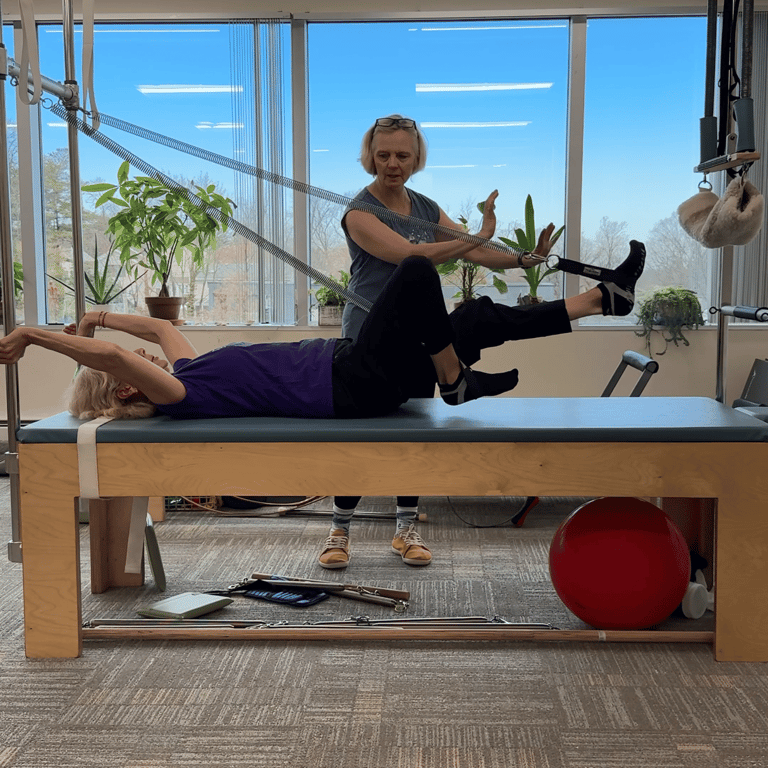
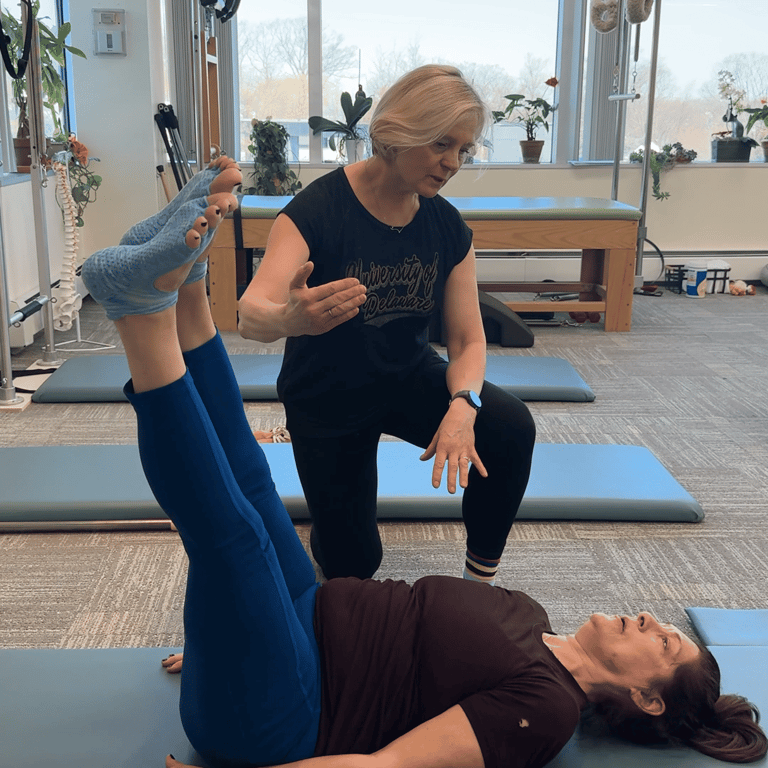
That's where I believe the Pilates method can help.
It challenges the body to move in ways that everyday life often no longer does. It reminds us how to move efficiently again.
I'm not suggesting that sitting is bad. After all, it is a part of modern life.
I simply want to share something I witness almost every day while working with people in my studio.
I also see it in my own family and, in myself from time to time. 🙂
The body is always adapting.
So the question becomes:
What is your body adapting to?
Perhaps the first step toward taking control over the trajectory of your well-being begins with answering one simple question honestly:
"How many hours did I spend sitting today?"
To Your Health!
Joanna 😊