Pilates False Starts
Perhaps you are one of those people who started Pilates but did not see the results fast enough, and feeling disappointed, you stopped.
NEWSLETTERS
Joanna Telacka
4/26/2026
For a method that should be a way of life for all of us, I see many false starts among people I meet socially and professionally—you probably do too. Perhaps you are one of those people who started Pilates but did not see the results fast enough, and, feeling disappointed, you stopped.
Chances are that you decided to try Pilates because of these reasons:
You’ve heard that it helps you feel more limber
You’ve heard that it helps improve posture
You suffer from pain and are told that you need to strengthen your core in order to alleviate it
You’ve heard that it can get you “in shape”
You were excited and had high expectations for your Pilates journey to successfully solve your problem. But what you may not have heard before is that taking up Pilates requires a commitment—a long-term commitment to studying and practicing the method.
The process consists of two parts. The first part is easy: taking a lesson and doing what the teacher is asking you to do. The second part is the action that will make the method address your issues: practicing on your own.
To start, this means a short routine 3–4 times a week until you master the movements. After that, it means continuing to practice on your own a couple of times a week and adding exercises as you learn them in your lessons with the teacher.
Mistake #1: Coming to your first Pilates lesson convinced that you will know what to do.
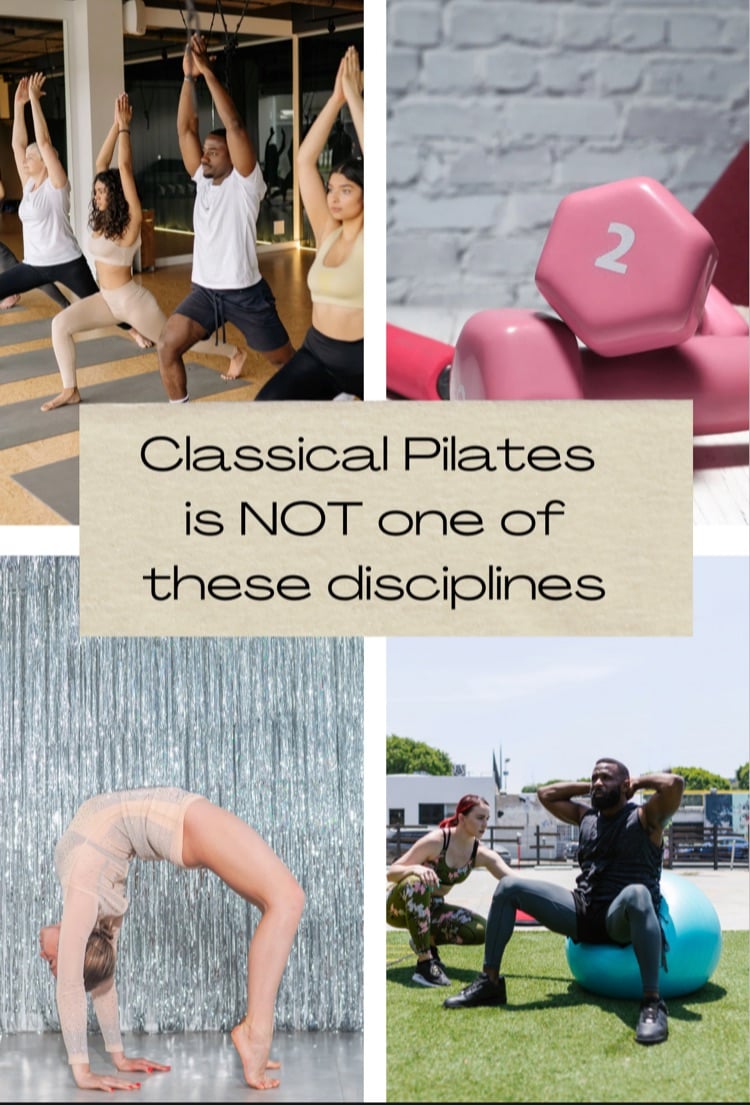
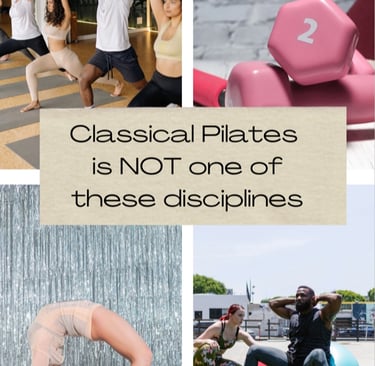
Pilates is unlike any movement discipline you have ever encountered. It is not like yoga, or weight training or gymnastics/ballet, and not the same as calisthenics.
So coming to your first lesson with a “beginner mindset” will be helpful in keeping an open mind and to be ready to learn new and unfamiliar movements.
By being a good listener and making careful study of every movement, you will create a long-lasting positive change in your body and will solve the issues that prompted you to start practicing Pilates.
Mistake #2: Coming to your first Pilates lesson trying to “show” the teacher what you know.
It is easy when you start Pilates to "jump ahead" and assume that you know what the teacher wants you to do.
This happens from time to time when you try to compare the movement to something you know from other disciplines.
Other times it comes from assuming what an exercise is about based on its name. You can come to find that in Pilates, the names of the exercises can be misleading at times. So pay attention to how your teacher describes the movements from start to finish, and resist "jumping ahead."
Mistake #3: Coming to your first Pilates lesson believing that all your progress only happens in the studio.
Your success with Pilates depends on your input–which means you need to prepare yourself to do exercises at home.
There will be homework given. Rather than wait for the teacher to whip out a sheet of paper with an assignment, pay close attention during the lesson so that you can replicate the exercises at home. Ask questions, pay attention to details, and build your movements slowly. First, these will be simple movements. Then you will gradually progress to more challenging ones. Remember, all of it stems from the fact that you have to take ownership of the workout.
You will get out of the method exactly as much as you put into it.
I offer this advice:
1. Come to your Pilates lesson with a “beginner mind”
2. Take mental notes.
3. Make an effort to learn the names of the exercises
4. Practice at home.
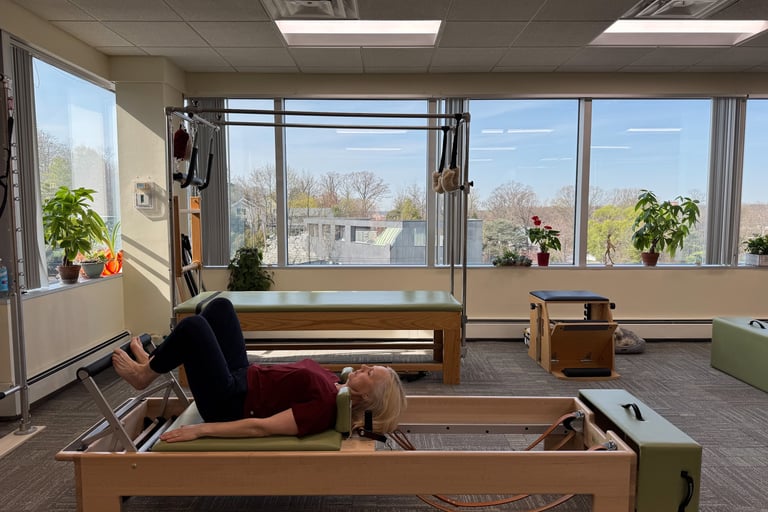
Make it your business to learn the fundamental concepts through the foundational/mini-exercises when you are first starting. Learn the first 5, and then the first 10 exercises on the Mat. Use the lessons at the studio to learn exercises to do at home, instead of just focusing on working with springs and the apparatus.
Of course, using springs is very beneficial but spend the last 10 minutes out of the 55-minute lesson to make sure that you are prepared to do your "homework." Have enough to work on at home, and make sure that you retain that information.
This approach can be invaluable– you practice exercises at home, and when you come to the studio and use the apparatus, you will be more efficient and have more time in your lesson to advance, learn new exercises, and enrich your repertoire.
Pilates, as studious as it is, can be a lot of fun. But ONLY when you lay a solid foundation for it 😊